AC Repair or Replace? A Bakersfield Homeowner's Decision Guide
Judge age in valley run-hours, not birthdays - Bakersfield systems live harder and shorter lives than national averages suggest.
Read the Guide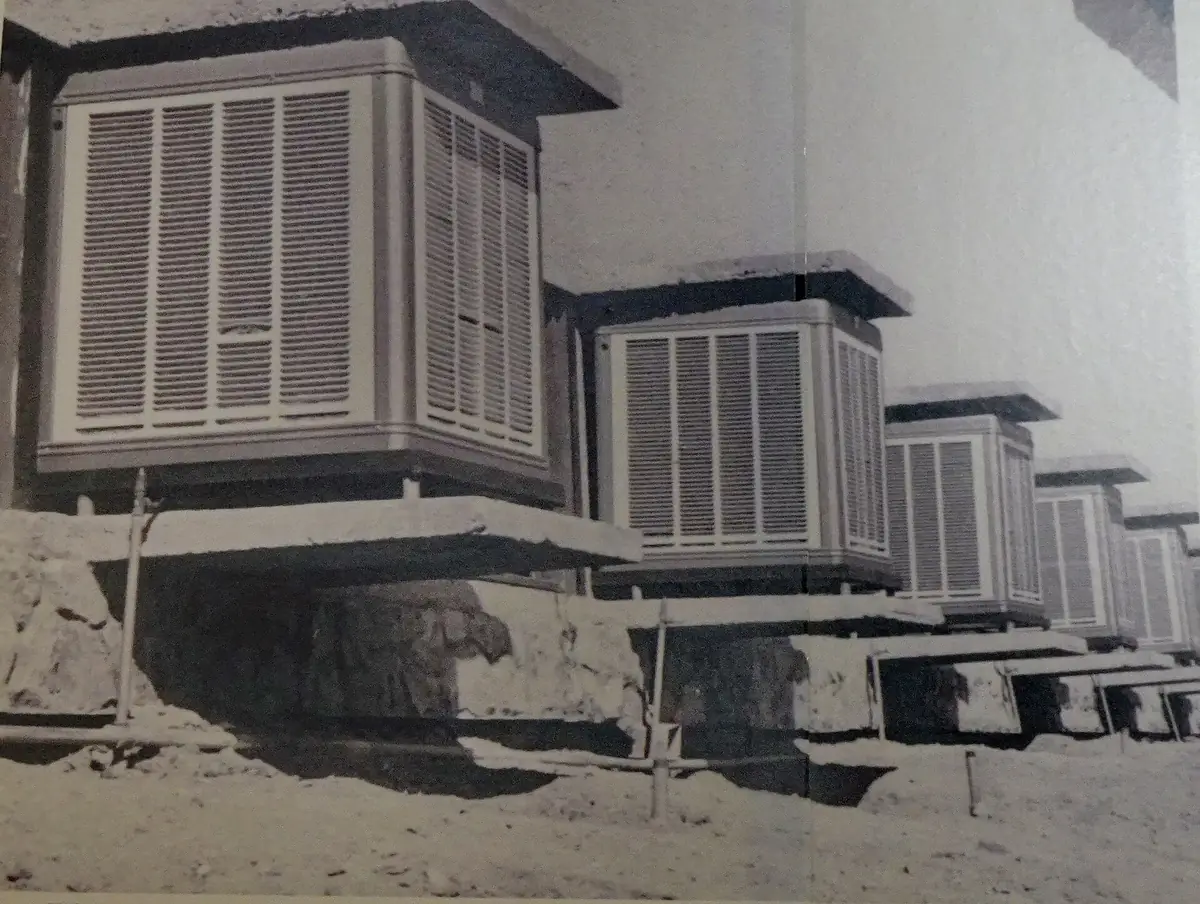
Swamp coolers cool Bakersfield's dry heat cheaply but surrender on humid spells, smoke weeks and the most extreme afternoons.
Problem: Swamp coolers cool Bakersfield's dry heat cheaply but surrender on humid spells, smoke weeks and the most extreme afternoons.
Solution: Refrigerated air costs more to run and more to install, and delivers exact temperatures in all of it - the choice is about which weeks your household cannot give up.
When to call: The hybrid - cooler for the shoulders, refrigerated zones for the core - is the valley's pragmatic middle and often the best spend.
Few housing arguments in Bakersfield are older than this one. The swamp cooler cooled the valley for generations at pennies a day; refrigerated air promises a thermostat number and keeps it through anything the summer invents. Both camps can cite July afternoons. The honest comparison is not about which machine is 'better' - it is about physics, the valley's specific exceptions, and what a particular household's life actually requires.
Agriculture is the second force. Almonds, grapes, citrus, carrots and cotton work right up to the subdivision fences, and the fields send their residents visiting - rodents at harvest, ants and crickets in season, mosquitoes off the irrigation canals, and pantry pests wherever grain and feed are stored. A Bakersfield home is never as separate from the farm as its fence suggests.
A swamp cooler cools by evaporation: hot dry air passes through wet pads, water absorbs heat as it evaporates, and the air delivered sits a margin below the outdoor wet-bulb temperature. In Bakersfield's classic dry heat - 105 outside, low humidity - that margin lands in the high seventies indoors with windows cracked for the exhaust. It is genuinely effective cooling at a small fraction of refrigeration's energy cost, which is why the valley built its summers on it.
The same physics sets the limits. When humidity rises - a monsoon-pattern spell, an irrigated still week - the margin collapses and the cooler delivers damp air at near-outdoor temperatures. On the extreme afternoons, 112 and beyond, even dry physics lands indoors in the mid-eighties. And because the system works with windows open, it cannot close the house against wildfire smoke, dust storms or a bad-air week - the valley's increasingly regular guests.
The cooler's ledger is famously light on electricity - a pump and a blower against a compressor's appetite - and heavier on water, pads and seasonal labor: start-ups, shutdowns, pad replacements and the mineral discipline the valley's hard water imposes. Refrigerated air reverses the ledger: substantial electricity through the long season, minimal water, and maintenance measured in filters and an annual check rather than a water-management ritual.
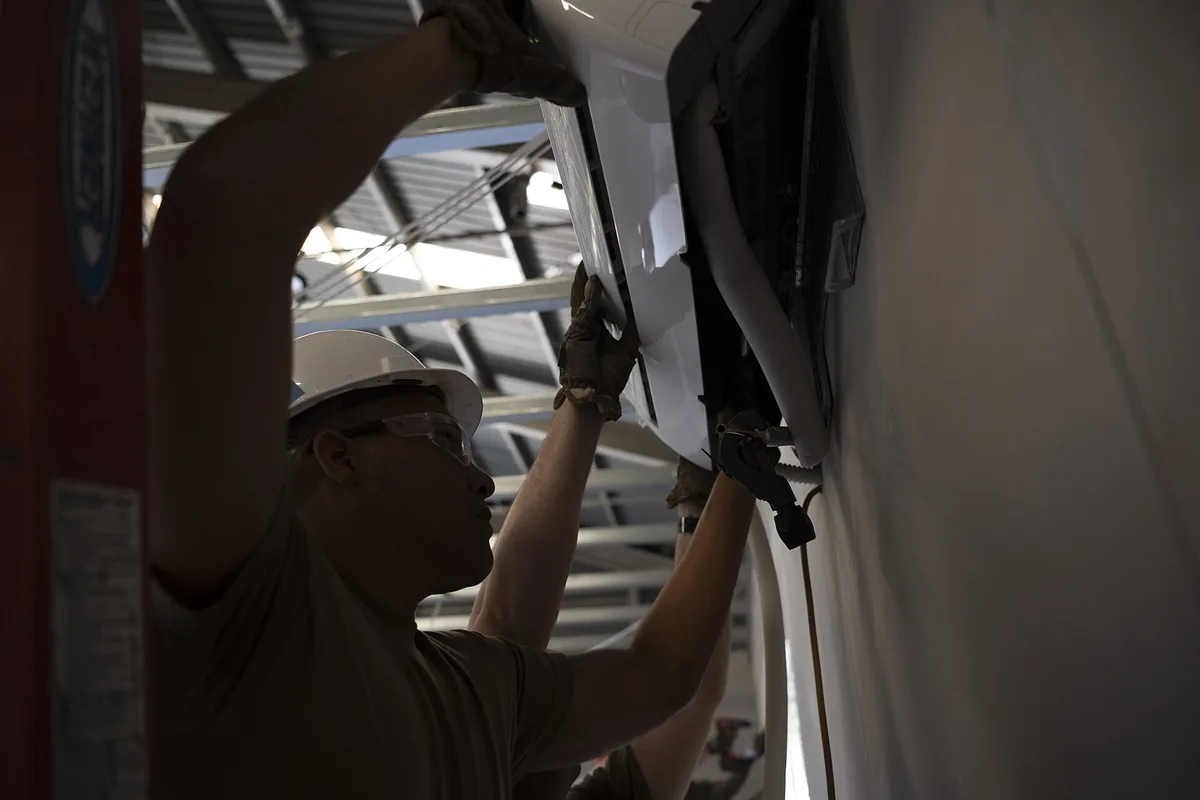
Installation widens the gap honestly. A cooler replacement is a modest project; a conversion to refrigeration is a designed one - ducts where none existed or small ones did, electrical capacity, equipment sized by load. The comparison a household actually faces is rarely cooler-versus-central on equal terms; it is cooler-versus-a-project, and the project's price is the real entry fee to the thermostat's certainty.
Households rarely convert because of the average day - the cooler wins the average day on cost. They convert because of specific weeks: the smoke week when the windows must stay shut and the cooler must stay off; the humid spell in a home with an infant or an elder whose health prices exact temperatures; the work-from-home summer when the back bedroom at 86 degrees is a professional problem. The decision is made by the household's worst weeks, and it is legitimate for those weeks to outvote a hundred pleasant ones.
Medical reality sits at the top of that list without apology: respiratory conditions, heat-sensitive medications and age all convert 'cool enough' from a preference into a requirement. No honest comparison talks a household out of a medical need with an electricity bill - the arithmetic includes the ambulance it avoids.
Bakersfield's pragmatic invention is the staged house: the swamp cooler kept for the long dry shoulders of the season, ductless refrigerated zones added for the bedrooms and living core, each system running the hours it is best at. The hybrid's annual spend often undercuts pure refrigeration while eliminating the cooler's bad weeks entirely - the smoke week runs on the sealed zones, the mild months on evaporation's pennies.
Staging also respects budgets and roofs: the conversion happens room by room as funds allow, and many households discover the two zones they added were the whole answer, the cooler retiring quietly years later or staying as the shoulder-season machine. The assessment that prices the hybrid beside the full conversion is doing the household the courtesy of the complete map.
The decision framework is short. If the household's worst weeks are tolerable and the budget is the binding constraint, a well-serviced cooler remains a rational Bakersfield machine. If health, smoke or work make exact cooling non-negotiable, refrigeration is not a luxury but the requirement it appears to be. And if the answer is 'some rooms, some weeks,' the hybrid was invented for your house specifically. What no household should do is decide from a brochure in either direction - the physics and the calendar are knowable, and the assessment exists to apply them to your walls.
In Bakersfield rentals the comparison has a third party: the household enduring the cooler's bad weeks is rarely the one who would pay for the conversion. California habitability requires adequate cooling capability, and evaporative systems in working order generally satisfy it - which leaves the smoke-week and humid-spell arguments to negotiation rather than law. Tenants' strongest instruments are documentation: dated indoor temperatures during failure weeks make the case that a maintenance argument cannot.
Landlords running the numbers should count the valley's direction of travel: smoke weeks and heat extremes are increasing the share of summers where evaporative-only units generate complaints, vacancies and turnover costs. The hybrid zone in the primary bedroom is increasingly the rental market's compromise - modest capital, and the worst weeks retired.
Cooling type prices into Bakersfield transactions in ways newcomers underestimate: refrigerated air is a listed feature buyers filter for, while a cooler-only home narrows its buyer pool to the valley-raised. The conversion's return is therefore partly a marketability return, realized at sale even where summers were tolerated happily for decades. Conversely, a well-documented cooler with service records reassures the buyer who prefers it - the paper matters on both sides of the argument.
None of this makes conversion compulsory arithmetic; it makes it complete arithmetic. The household deciding with comfort, health, running cost and resale all on the table is deciding the question the house actually asks.
Water management has a chemistry footnote the valley insists on: as sump water concentrates minerals, it also concentrates whatever the pads have filtered from the air - the sump is a soup the bleed-off exists to dilute. Households sensitive to the musty start-up smell are usually meeting last shutdown's omission. The seasonal services, done in order and on time, keep the machine's water younger than its smell.
That is the service side of this guide's subject. When you are ready, the Swamp Cooler Service & Conversion page carries the process, the coverage by area and the number to call.
Smoke, humidity, heat extremes, medical needs - list the weeks the cooler has failed your life, not your comfort. That list is the decision.
Cooler service and pads, the hybrid zone plan, and the full conversion - each as a designed scope with running-cost estimates, not appliance tags.
Ducts, electrical panel, roof and attic: the conversion's hidden scope lives here, and surprises are what assessments exist to prevent.
Whichever machine wins, its seasonal service is what keeps the decision true - an unmaintained winner loses to a serviced runner-up every summer.
Smoke days, humid spells, 110-plus afternoons, medical needs - dated from last summer if memory serves, with indoor temperatures where you have them.
A season of electric bills and the water and pad spend, side by side - the comparison needs your meter, not an average.
Panel capacity, duct presence and size, attic and roof state - the hidden scope, inventoried before quotes.
Which rooms actually need certainty - usually bedrooms and one living core. Mark them; that map is the project.
The scope of an honest assessment in Bakersfield includes the options in their real configurations: cooler rehabilitation where the machine is sound, zone-by-zone refrigeration for the hybrid, and the full conversion with its duct and electrical truth. A provider who quotes only one configuration has answered a smaller question than the household asked.
Timelines scope too: conversions are spring projects by preference, when crews, equipment and the household's patience are all in season. A July decision usually becomes a hybrid-first staging by necessity - which, as this guide argues, is frequently where the valley's wisdom was pointing anyway.
The professional assessment prices the decision's hidden halves: ducts and electrical for the conversion, water and roof truth for the cooler, zone arithmetic for the hybrid. Households decide well when the options arrive as engineered scopes; they decide expensively when the options arrive as appliance prices.
Get the assessment when the question is live but the weather is not: spring quotes for summer decisions. Bring your worst-week list and last season's bills - the advisor who asks for both is the one running your numbers rather than a script.
The valley cooled itself with water and air for a century, and cools itself with refrigerant now - both honestly, on different weeks. The right answer for a Bakersfield house is the one that survives its worst week at a price its ordinary weeks can carry, and that answer, house by house, is knowable.
Judge age in valley run-hours, not birthdays - Bakersfield systems live harder and shorter lives than national averages suggest.
Read the GuideDust mats condenser coils, loads filters monthly and films evaporator coils - cutting capacity and raising bills before it causes outright failures.
Read the GuideFor dry-heat weeks and tolerant households, yes - it has cooled this valley for generations at a cost refrigeration cannot approach. Its honest failures are humidity, smoke and extremes. 'Enough' is therefore a household verdict, not a climate one, and both answers are respectable.
On electricity, dramatically - often a small fraction of a refrigerated system's draw. Water use, pads and seasonal service narrow the gap, and the honest comparison uses your household's actual summer bills and water rates rather than a statewide average that describes no one.
That is the hybrid, and it is one of the valley's most sensible projects: ductless zones where sleep and health live, evaporation for the rest. Many households stop there permanently. The zone study prices it against the full conversion so the stopping point is chosen, not stumbled into.
It exchanges air constantly, which dilutes indoor pollutants - a genuine benefit - while adding moisture and admitting outdoor air unfiltered, which in smoke or dust events is the opposite. Cooler homes manage air differently, not simply worse; the fog shoulder seasons are where their moisture discipline matters most.
One call connects you with a local home-services professional serving Bakersfield - pest control and cooling help, matched to your part of the valley.