Argentine Ants in Bakersfield: Why They Own the Summer (and How Homes Fight Back)
Argentine ants live in supercolonies with thousands of queens - killing the trail you see changes nothing.
Read the Guide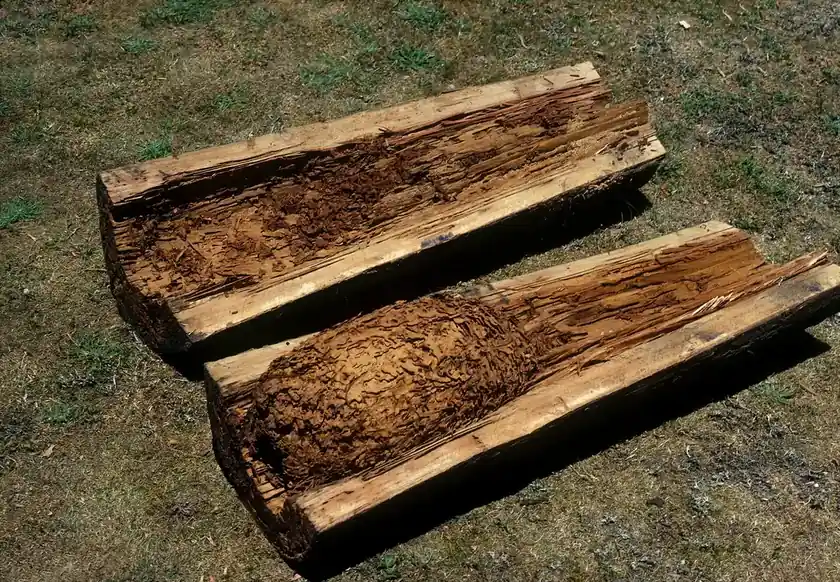
Subterranean termites announce themselves with mud tubes and spring swarmers; drywoods with frass pellets and fall swarmers.
Problem: Subterranean termites announce themselves with mud tubes and spring swarmers; drywoods with frass pellets and fall swarmers.
Solution: Wings at the windows, pellets below the beam, tubes on the foundation - each sign has a species, a location and a next step.
When to call: Evidence is not a verdict: active versus historic is the inspector's call, and it decides whether you need treatment, monitoring or neither.
Termites are the quiet line item of San Joaquin Valley homeownership: colonies in the soil of every neighborhood, drywoods in the framing of the older stock, and damage that accumulates in the dark between inspections. The good news is that termites are careless witnesses - they leave four kinds of evidence, consistently, and a homeowner who can read the signs catches colonies in their cheap years instead of their structural ones.
And winter is not the mild season the postcards promise. From November into February the Tule fog settles over the valley floor for days - dense, damp and cold - chilling homes, wetting every surface and driving rodents and insects indoors to wait it out. Bakersfield systems are built, or should be, for the heat, the farm, the dust and the fog at once.
Subterranean termites live in the soil and commute: colonies nested underground, workers traveling to wood through mud shelter tubes, returning to the colony's moisture. They are the valley's foundation threat - slab homes crossed at joints and plumbing penetrations, raised homes entered at piers and sills. Their colonies are large, their appetites steady, and their evidence is architectural: tubes, and swarms in spring.
Drywood termites live in the food: a colony is a gallery system inside a beam, an eave, a window frame or a piece of furniture, needing no soil contact at all. They spread on wings during warm fall evenings, founding new galleries where they land. Their evidence is domestic: the little piles of pellets - frass - pushed out of the gallery, and swarmers at the lights in October.
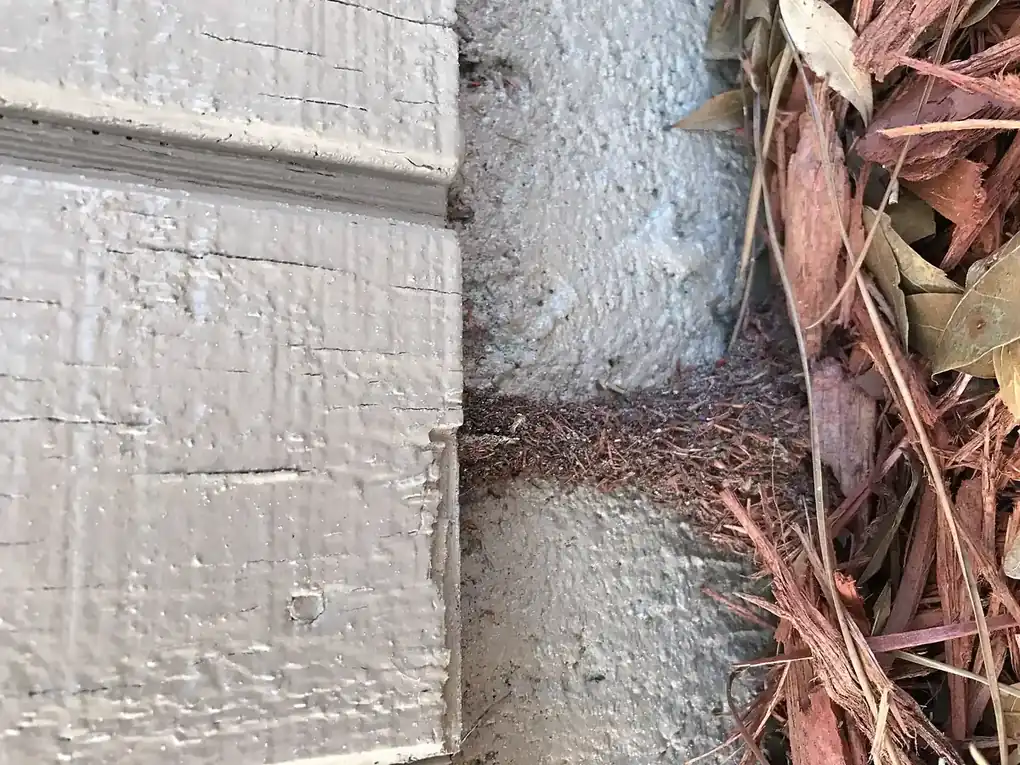
A mud tube is a termite road: pencil-width, earthen, running up foundation concrete, along a stem wall, or hanging as a straw from a crawlspace joist. Tubes protect the soft-bodied workers from dry air and predators, and a tube means a colony has a supply line to your structure. Break a section and check it in a few days: rebuilt means active traffic; hollow and dusty suggests an abandoned line - a distinction an inspector makes carefully, because old tubes are history, not emergency.
Where tubes appear tells the entry story: at expansion joints in garage slabs, around plumbing penetrations in bath areas, at the pier tops in crawlspaces. Photograph and leave them intact for the inspection - the tube's location on the map is evidence the treatment plan will use.
Drywood frass is unmistakable once seen: tiny elongated pellets, like ground pepper or coarse sand, in little conical piles below a kick-out hole in wood. The pile's location points up to the gallery; fresh pellets are hard and varied in tone, old ones dusty. Frass on a windowsill under an eave, on the garage floor below a rafter, or inside a cabinet is a colony introducing itself in writing.
Swarmers - termites on the wing - are the colonies' annual announcement. Subterraneans swarm on warm days after spring rains; drywoods on warm fall evenings. Finding winged termites indoors, or their shed wings in spider webs and sill corners, means a mature colony is very close - for drywoods, usually in the building itself. Wings alone at an open door on swarm night can be visitors; wings at a closed window week after week are residents.
Termite damage reads differently from rot or carpenter ants: subterranean galleries run with the grain and are packed with mud; the wood's surface stays painted and intact while the interior becomes layered paper. The tap test - a screwdriver handle along beams and sills - returns a hollow, papery note where galleries run. Floors that flex, doors that suddenly stick and paint that blisters over softened wood are the late editions of the same news.
The fence test deserves its reputation: colonies eat the yard's wood first and most openly. A fence post or landscape timber that crumbles at the ground line is the colony's scout report on your property - and the correct response is an inspection of the house, not just a new post.
The sequence matters more than the speed: do not disturb the evidence, do photograph it with locations, and do schedule the inspection while the signs are fresh. Spraying a tube or vacuuming frass before the inspection erases the map the inspector needs to classify activity and species - and classification is everything, because the treatments for the two termites share almost nothing.
The inspection's verdict comes in three honest forms: active infestation requiring treatment, historic evidence requiring monitoring, or conducive conditions requiring correction. Each has its paperwork and its price, and a valley homeowner should expect any of the three without disappointment - the point of reading signs early is to keep the verdict in the second and third columns.
In raised-foundation Bakersfield homes, the crawlspace tells the subterranean story firsthand: tubes climbing the piers, mud packed at the sill plates, and the moisture stains that mark where irrigation or plumbing has been feeding the soil side of the equation. It is dark, tight and unglamorous, and it is where the evidence lives - a homeowner's annual flashlight tour, even an inexpert one, notices the new tube that last year's tour did not have.
The attic reads the drywood chapter: frass cones on the insulation below rafters, galleries in the eave framing where swarmers land each fall, and the occasional discarded wing drifted in a web. Attic evidence accumulates undisturbed for years, which makes it the best archive the house keeps - an inspector reads its layers the way a ranger reads tree rings.
Subterranean colonies do not file change-of-address forms at property lines. The colony eating a fence on the boundary is foraging your soil too, and a neighbor's untreated infestation is a standing pressure on every structure in foraging range. This is why inspectors ask about the street's history and why a treatment proposal sometimes mentions the fence line: the colony's true address is a territory, and your foundation is a neighborhood it shops in.
The practical consequence is cooperation where possible: adjoining owners who inspect and treat in the same season get valley results neither achieves alone, and fence replacements that use the moment to break wood-to-soil contact are small civic acts of termite prevention.
Treatment systems divide by how they meet the colony. Soil treatments create a treated zone the subterraneans must cross, with modern products designed to be carried back into the colony itself; bait systems station the perimeter and let foragers recruit the treatment home over weeks. Drywood work divides differently - localized injection and treatment where galleries are accessible, whole-structure approaches where they are not. The inspection's map, the structure's construction and the household's situation choose among them, and any honest proposal says why its system fits your map.
That is the service side of this guide's subject. When you are ready, the Termite Control page carries the process, the coverage by area and the number to call.
Look for tubes on concrete, soil piled against stucco, and moisture at the wall base. Ten minutes, twice a year.
Wings collected at windows and doors, their location noted - indoors at closed windows is the significant pattern.
Garage sills, fence posts, deck joists: a hollow note or a crumbling ground line earns a photograph and a call.
Evidence with a date and a location is an inspector's shortcut; evidence cleaned away is a story they must take on faith.
Tubes, soil lines, moisture - the subterranean season's opening read, photographed against last year's.
Wings at windows and in webs, locations noted; indoor wings at closed windows escalate to inspection.
Posts and timbers probed at the ground line - the colony's scout report, read before it reaches the house.
Cones below rafters and eaves after the drywood swarm - fresh pellets restart the inspection clock.
A word about older Bakersfield homes and their paperwork: decades of owners leave decades of marks - old tubes, patched sills, treatment stickers in the water heater closet. None of it is alarming and all of it is evidence. The homeowner who keeps a simple termite file - inspection dates, findings, treatments - hands every future buyer, lender and inspector a shorter conversation, and hands themselves the trend line that shows whether their conditions work is winning.
For homes under transaction timelines, build the inspection into the first week of the window. Findings discovered early are negotiations; findings discovered at the deadline are crises, and the same tube costs very differently in the two weathers.
The professional read adds three things the homeowner's cannot: access (the crawlspace's far corners, the attic's eave ends), classification experience (active against historic across hundreds of houses a year), and the documented report whose categories transactions and treatments are built on. The signs in this guide make you a good witness; the inspection makes the witness testimony.
Call the inspection at the first confirmed sign - a rebuilt tube, a reappearing frass pile, wings indoors - rather than collecting more evidence yourself. The classification of active versus historic is the professional act; everything after it is scheduling.
Termites are slow, silent and entirely legible. The valley homeowner who learns their four signs and walks the property twice a year has converted the region's most expensive pest surprise into a monitoring habit with a flashlight - and that conversion, more than any treatment, is what termite protection actually is.
Argentine ants live in supercolonies with thousands of queens - killing the trail you see changes nothing.
Read the GuideSpring: termite swarmers, ant colonies waking, wasp queens founding, mosquitoes at first irrigation.
Read the GuideA tube proves a colony has reached your structure; whether it is actively feeding there now is the inspection's determination. It is never a wait-and-ignore finding, and it is rarely a panic one - termites work in months and years, and a prompt inspection keeps the response proportionate.
Like tiny footballs or ground pepper - hard, elongated pellets a millimeter long, in shades of tan and brown, piled in little cones below the wood they fell from. If the pile reappears after cleaning, the gallery above it is active. That reappearance test is the homeowner's simplest instrument.
Yes. New construction disturbs colonies rather than removing them, and fresh landscaping gives them irrigated soil against new foundations. Age is no defense; the valley's pressure is geographic, not generational.
Break a small section if you are comfortable, mark the date, and recheck in several days - rebuilding means active. But leave the rest intact and photograph everything: the inspector reads the whole line, and every disturbance is information lost.
One call connects you with a local home-services professional serving Bakersfield - pest control and cooling help, matched to your part of the valley.