Bed Bug Preparation Guide: What To Do Before (and After) Treatment in Bakersfield
Do not move bedding or furniture between rooms before treatment - it spreads the harborage faster than any treatment can chase it.
Read the Guide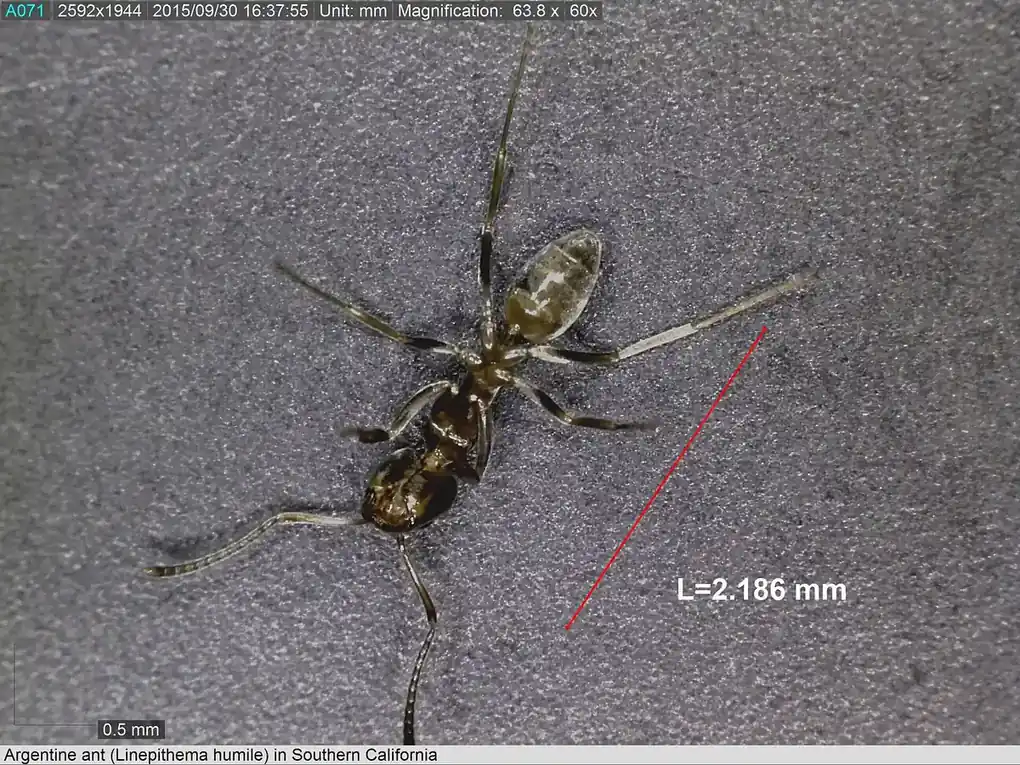
Argentine ants live in supercolonies with thousands of queens - killing the trail you see changes nothing.
Problem: Argentine ants live in supercolonies with thousands of queens - killing the trail you see changes nothing.
Solution: Repellent sprays make it worse by budding the colony into new nests; slow transferable baits carried home by workers are the control.
When to call: Water discipline - irrigation off the foundation, drips fixed - removes the reason your house is on the colony's map.
Every Bakersfield summer has the same opening scene: a fine dark line of ants at the kitchen sink, the pet bowl, the bathroom tap - appearing within days of the first real heat and returning however often it is wiped away. That line is the Argentine ant, the most successful pest in the San Joaquin Valley, and understanding what it actually is - a supercolony, not a nest - is the difference between controlling it and redecorating for it.
Dust runs third. Wind works the valley floor and the foothills, loading AC coils and filters with grit, driving spiders and scorpions toward shelter, and carrying the valley's own hazard - the fungus that causes valley fever lives in this soil and rides this dust, which is one more reason the region takes airborne dirt seriously. What the wind delivers, home systems must be built and serviced to handle.
Argentine ants do not live in single nests with single queens. They run polydomous supercolonies: many nests, thousands of queens, workers flowing between them without the territorial wars that limit other species. The colony under one Bakersfield street may function as a single organism with a population in the millions, which is why the ants at your sink are not 'an infestation' in the usual sense - they are a drinking party from a population that also lives under forty other houses.
This biology explains the homeowner's core frustration: the colony replaces losses instantly. Workers are expendable scouts; queens are the capital. Any control that kills only workers is mowing a lawn. The strategies that work - baits the workers carry home and share through the colony's food exchange - are designed to reach the queens through the one delivery system the colony cannot refuse: its own supply chain.
The Argentine ant's requirements read like a valley brochure: a long frost-free season, steady moisture, and abundant food. Bakersfield adds its own gifts - irrigated landscaping in a dry land, which concentrates every colony's thirst and nesting along the watered lines of houses, and mild winters that never reset the population. The ant pressure here is not an accident of a bad year; it is the climate's standing output.
The irrigation map is the colony map. Drip lines, sprinkler arcs, shaded foundation soil and the condensate drip by the AC unit are the colony's highways and nurseries. Indoors, the trails key on the same element: faucets, pet water, the water heater's relief line. Follow the water in any Bakersfield ant problem and you have followed the ants.
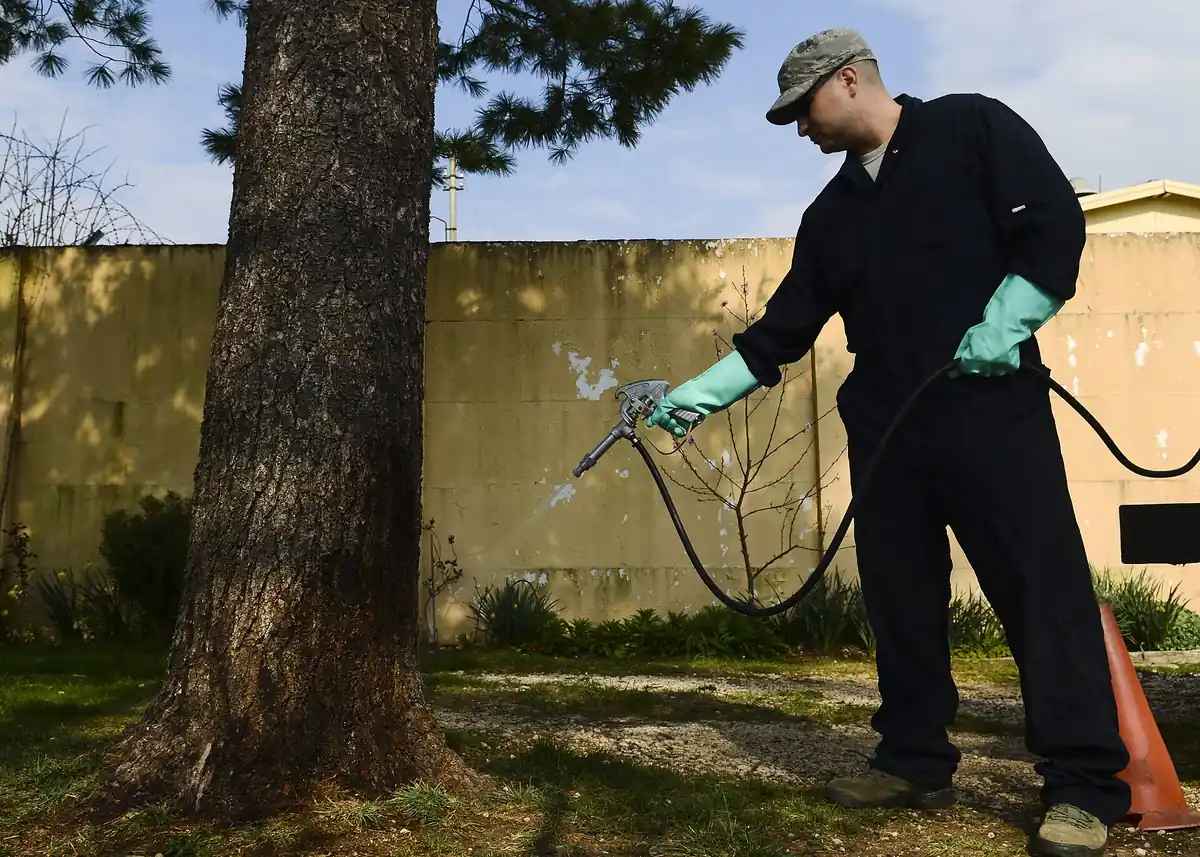
Repellent insecticides trigger the colony's emergency defense: budding. Stressed by repellent barriers, Argentine colonies split - groups of queens and workers founding new nests in new locations, including deeper inside the structure. One trail sprayed at the counter becomes three trails in new rooms within weeks, and the homeowner concludes the ants are 'immune.' They are not immune; they are reorganized. The product did exactly what its chemistry told the colony to survive.
The second failure is subtler: spraying the foragers that would have carried bait home. A baiting program needs living workers following their scent roads to the bait stations. A freshly sprayed trail is a broken road with dead couriers. Households mid-program are always told the same thing, and it feels like surrender: stop spraying, let them drink - the drinking is the delivery.
Control runs in phases the colony's calendar sets. Baits are chosen by the colony's current appetite - carbohydrate baits when the colony is foraging sweet, protein when brood production peaks - and placed along the trails and at the perimeter stations where foragers recruit. The active ingredients are deliberately slow: a worker must live long enough to feed dozens of nestmates and the queens. Trails thin over days to weeks, not hours, and the thinning pattern is how the technician reads whether the colony is taking the bait or the season has shifted its diet.
The perimeter is treated as part of the same system - nest sites in planter soil, under slabs and along irrigation lines are the reservoir the indoor baiting drains. A program addressing only one side of the wall negotiates forever; addressing both collapses the local population to the level where the house drops off the colony's route map.
No bait program outruns a leaking hose bib. The domestic half of Argentine control is water discipline: irrigation pulled back from the foundation so the perimeter soil dries, drips and condensate lines repaired or rerouted, pet water managed, and the caulk-width gaps at pipes and thresholds sealed. Each item subtracts the house from the colony's resource map, and together they are the difference between a colony controlled and a colony merely visited.
Food discipline rides along: the dropped jam, the open cereal box and the pet bowl left full overnight are foraging beacons measured in pheromones. None of this requires a sterile house - it requires a house that does not cater. The valley's ants will always live outside your walls; the household's habits decide whether they have any business inside them.
Start at the water. Check the sink's underside lines, the water heater's base, the pet bowl and the AC condensate drip - the colony's thirst writes the first map. Then walk the exterior line the trails use: follow one trail outward with a flashlight at dusk, when foraging peaks, and it will show you the entry point and usually the direction of the nest zone - a planter, a slab seam, the irrigation line's shaded run.
Note the trail's cargo and tempo. Workers carrying food fragments mark a feeding trail to a found resource; a two-way highway of empty and laden ants marks an established route between nest and resource. The distinction matters for bait placement: stations belong on highways, at the edges where foragers recruit, not in the middle of a spill's cleanup zone. Five minutes of this reading, reported to the technician, is worth a return visit.
Argentine ants do not respect unit boundaries, and neither can control. In Bakersfield apartments and duplexes, a single unit's baiting program fights the building's colony with one hand - the population flows along shared plumbing and irrigation lines from untreated neighbors. Landlords and managers who treat ant control as a building program get building results; the unit-by-unit approach produces the familiar rotation of complaints around the property, each unit briefly clear as the colony tilts away and returns.
Tenants hold one strong card: documentation. Dated photographs of trails, the rooms involved and the water sources affected turn a complaint into a work order with a map attached. California habitability expectations put structural pest control on the owner; the tenant's evidence is what makes that duty specific and schedulable.
Bait science is the deep chapter of Argentine control: the bait must be attractive enough to compete with the season's natural forage, slow enough that foragers survive to share it through the colony's food exchange, and refreshed across the weeks the transfer takes. Sweet baits in the feeding season, protein baits when the colony is building brood - the technician's bait choice reads the colony's appetite the way the inspection read its trails.
That is the service side of this guide's subject. When you are ready, the Ant Control page carries the process, the coverage by area and the number to call.
Note where trails run, when they peak and what they are heading to - water or food. The map tells the technician where bait stations belong and which colony appetite to feed.
Stations go at trail edges, entry points and perimeter lines - and the trails are not sprayed, wiped with repellent, or 'helped' afterward. The workers are the delivery fleet.
Irrigation arcs adjusted off the foundation, drips repaired, condensate routed away, pet water routines tightened. The resource map shrinks as the colony does.
Trail counts are re-read at the follow-up; bait type and placement follow the colony's response and the season's dietary shift.
A flashlight walk along the foundation at peak foraging shows entries, highways and the nest direction better than any daytime guess.
Every drip, condensate line, pet bowl and irrigation arc touching the house - listed, then fixed or rerouted in order of flow.
Branches, shrubs, stored items and hoses touching the structure: each contact is a highway lane; cut them all in one pass.
Bait stations and their dates on camera - the follow-up comparison is how thinning is proved, not felt.
A note on expectations for Bakersfield homes specifically: in established neighborhoods the supercolony is a permanent feature of the soil, and 'control' means your house is defended - interior clear, trails absent, perimeter population collapsed - while the species persists in the street's deeper soil. Households that understand this buy the right thing once; households promised an emptied neighborhood buy disappointment on a schedule.
The program's maintenance tail follows from the same fact: periodic re-baiting and the water discipline are not evidence the treatment failed but the standing terms of living in Argentine country. The valley's oldest pest relationship is managed, not concluded, and the management is lighter every year the conditions list stays worked.
The professional difference in Argentine work is logistics, not chemistry: bait selection by colony appetite, station placement on the actual highways, follow-up readings of the thinning pattern, and the perimeter reservoirs treated as part of the same colony. Any household can buy bait; the program is the map, the sequence and the patience - and in supercolony country, those are the active ingredients.
Bring in the bait program when trails run in multiple rooms, when a season of retail baiting has rotated without collapsing the trails, or when the map - irrigation, slab, structure - is beyond a weekend's reading. The colony's scale is the threshold: supercolonies are professional game.
The ants were in the valley before the houses were, and they will be in the soil after any given treatment - the contest was never for the valley, only for the house. Fight it on the colony's logistics - its thirst, its highways, its own couriers carrying the cure home - and the house wins its summers back, one dry perimeter at a time.
Do not move bedding or furniture between rooms before treatment - it spreads the harborage faster than any treatment can chase it.
Read the GuideSubterranean termites announce themselves with mud tubes and spring swarmers; drywoods with frass pellets and fall swarmers.
Read the GuideBecause they never left. The supercolony overwinters in the soil and wall voids at reduced tempo, and the first heat restarts the foraging map at full scale. Summer is not an invasion; it is a resumption, which is why the control that works is a program and not an event.
Visible thinning usually begins within days and the kitchen clears across two to four weeks as the bait circulates and queens fail. A sudden overnight disappearance more often means the colony budded or moved - the failure mode, not the success one.
They do not eat wood or wiring. Their damage is quality-of-life and food contamination - plus the company they signal: a house wide open to ant highways is open to the rest of the valley's cast. The gaps sealed for ants serve against everything smaller than a mouse.
Retail baits share the principle and sometimes the chemistry, and a light, early problem can respond. The failures come from placement, bait freshness and the spray-can instinct working against the stations. A supercolony-scale problem - trails in multiple rooms, multiple seasons - is where professional placement and follow-up earn their difference.
One call connects you with a local home-services professional serving Bakersfield - pest control and cooling help, matched to your part of the valley.