Bakersfield Pest Control

Spider Control in Bakersfield, CA

Spider control in Bakersfield - black widows in the garage and meter boxes, other hunters and web-builders - reduced by harborage work, prey control and targeted treatment.

Dust runs third. Wind works the valley floor and the foothills, loading AC coils and filters with grit, driving spiders and scorpions toward shelter, and carrying the valley's own hazard - the fungus that causes valley fever lives in this soil and rides this dust, which is one more reason the region takes airborne dirt seriously. What the wind delivers, home systems must be built and serviced to handle.

And winter is not the mild season the postcards promise. From November into February the Tule fog settles over the valley floor for days - dense, damp and cold - chilling homes, wetting every surface and driving rodents and insects indoors to wait it out. Bakersfield systems are built, or should be, for the heat, the farm, the dust and the fog at once.

Signs You Need Spider Control

Strong, irregular webs in garage corners, boxes and under eaves

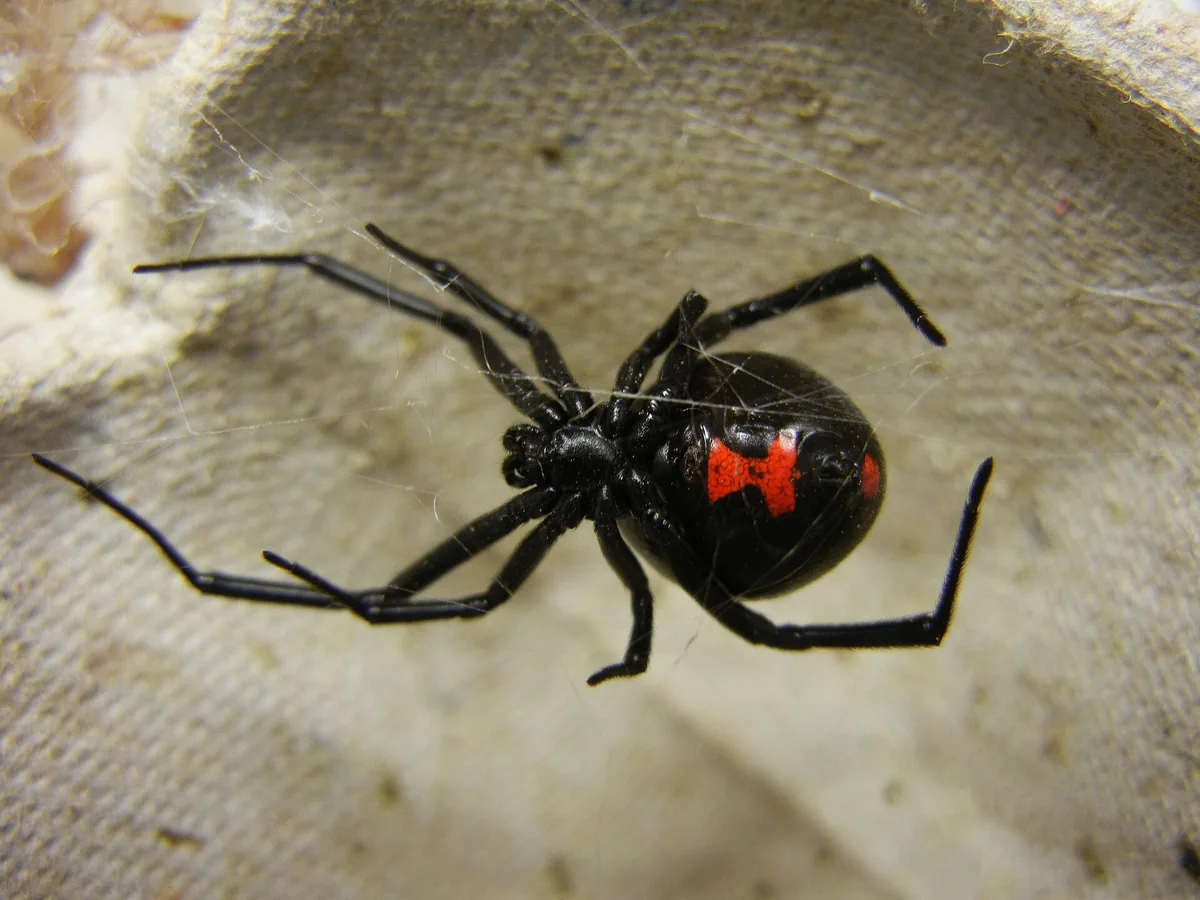
Widow webs are built low, messy and exceptionally strong - a web that resists the broom and crackles is widow architecture. The spider sits inverted at its edge, at night.

Egg sacs - round papery balls - in webs or stored items

Each widow sac holds a colony's worth of spiderlings. Sacs in the garage or woodpile mean the station is established and reproducing, not visiting.

Webs returning within days in the same corners

Rebuilt webs mark occupied territory and good hunting - the corner works. Either the spider survived your cleaning, or the prey traffic justifies a successor.

Spiders in the house at the baseboards and window lines

Indoor hunters follow indoor prey and the fall shelter shift. Occasional individuals are valley normal; regular traffic means prey and access are both being provided.

Widows found when moving stored items, meters or irrigation covers

The discovery moment is the risk moment: a hand into a dark box or cover where a widow waits. Any station found this way marks the audit the whole storage zone needs.

Heavy web load on the exterior - fences, eaves, lights

Exterior webs keyed to lights and insect traffic say the property feeds spiders well. The lights are buffets; the webs are the seating.

Why Spider Control Is a Standing Job in Bakersfield

The black widow's Bakersfield habitat is undisturbed darkness at ground level: the meter box, the irrigation valve cover, the woodpile's core, the stored box untouched since spring, the gap under the water heater stand. She does not wander; she stations. Every station on a property is findable in one methodical pass - which is what the treatment does first.

Her calendar is the warm half of the year: mating and sacs through summer, spiderlings ballooning to new stations, and a die-back of the exposed with winter - the garage stations, buffered, run longest. The male is small, brown and harmless-looking; the female at the web is the address that matters.

The supporting cast lives on prey economics: orb weavers at the lights, hunters in the leaf litter and ground cover, cellar spiders in the quiet corners. A Bakersfield property with heavy insect pressure will carry heavy spiders whatever is sprayed - prey reduction is spider control's slow, durable half.

Spider Control Through the Bakersfield Year

Fall is harvest and repair season together. The last grape and almond work pushes rodents out of the fields and toward homes, the heat finally lets go, and the weather turns calm - the right weeks to fix what summer exposed, seal the gaps the winter fog will test, and service the heating before the first cold, damp night arrives.

Spring is the valley's wake-up season. Ants march as the soil warms, termite colonies swarm on the warm calm days after rain, and the first hot afternoons wake cooling systems from their fog-season idle. A spring service visit - pest inspection outside, AC check before the heat commits - is the most valuable appointment on the Bakersfield calendar.

Bakersfield winters are Tule fog and cold nights. The fog sits on the valley floor for days at a time, damp penetrating every crawlspace and wall void, while rodents, spiders and overwintering insects settle into the warm structure of houses. Heating systems that sat idle since spring get their first real calls, and pest work turns inward: the attic, the garage, the voids.

Spider Control in Depth

Widow behavior explains the treatment's shape: she is sedentary, nocturnal and web-bound, which means contact treatments must be delivered to the station itself - broadcast spraying of open surfaces passes her by entirely. It also means the risk profile is manageable: widows do not hunt people, wander houses or defend territory beyond the web. The audit's calm conclusion for most properties is a short list of stations removed and a storage habit changed.

The ecological footnote is worth stating in a valley full of insects: spiders are the only pest on this page whose absence would make the others worse. The control target is the venomous station and the indoor load, not a spider-free property - a goal neither achievable nor, on a Bakersfield acre of insect pressure, even desirable.

Choosing the Right Help

Choose station-based control: an audit of the ground-level dark places, sacs removed, harborage listed, prey addressed. A provider spraying the open webs is treating the symptom's shadow - the widow is in the crack behind it, unimpressed.

The Climate Behind It

Bakersfield sits at the south end of the San Joaquin Valley, where the Sierra Nevada, the Tehachapis and the Coast Ranges close around the valley floor - and the geography sets the terms for every home system in the city. Summer is the headline: afternoons pass 100 degrees for weeks at a stretch, roofs and outdoor units bake all day, and air conditioners here log run-hours that mild-climate equipment never sees.

Agriculture is the second force. Almonds, grapes, citrus, carrots and cotton work right up to the subdivision fences, and the fields send their residents visiting - rodents at harvest, ants and crickets in season, mosquitoes off the irrigation canals, and pantry pests wherever grain and feed are stored. A Bakersfield home is never as separate from the farm as its fence suggests.

How Spider Control Works

Audit the stations

Garage, meters, covers, woodpile, storage and eaves are inspected station by station - webs, sacs and occupants mapped before anything is treated.

Remove webs, sacs and harborage

Physical removal first: webs and egg sacs out, clutter and stored-item harborage reduced - the station network is dismantled, not decorated.

Targeted treatment at the stations

Applications placed where widows actually station - ground-level, dark, undisturbed - rather than broadcast across surfaces they never touch.

Prey reduction and the exterior pass

The general insect pressure feeding the web economy is treated and the lighting and entry points addressed, so successor spiders find a poorer property.

Doing It Yourself vs a Professional

The DIY Route

  • Spraying the open web at noon while the widow waits in the crack behind it, untouched
  • Cleaning the webs monthly without ever removing the sacs that refill them
  • Treating the spiders while the light-fed insect buffet keeps advertising the address to successors
VS

The Professional Route

  • Audits the ground-level stations where widows actually live, instead of spraying the visible web tops
  • Removes sacs and harborage as part of the treatment - the population, not the decoration
  • Pairs the spider work with prey reduction so the property stops recruiting replacements

Keep It From Coming Back

Spider prevention is harborage management: widows need undisturbed darkness, and the habits below disturb it on a rhythm that keeps stations from ever maturing.

  • Wear gloves for meter boxes, valve covers and stored items - the rule costs nothing and covers the one real risk.
  • Clear garage clutter and store items in sealed bins off the floor; stations need undisturbed darkness.
  • Keep the woodpile away from the house and off the ground, and shake out stored gear before use.
  • Reduce night lighting at entries or switch to less insect-attractive bulbs - fewer insects, fewer webs.
  • Keep ground cover and shrubs trimmed off the walls; litter against the house is hunter habitat.
  • Sweep webs on a rhythm through summer, sacs included - you are removing next month's population.
Spider Control in the Kern County Towns

The towns around Bakersfield share its heat and its farm pressure - with their own twists of altitude, age and distance to open ground.

Spider Control in La Cresta

La Cresta and Alta Vista sit on the bluffs northeast of downtown - custom homes, winding streets and river views in one of the city's oldest upscale districts. The elevation buys breeze and outlook; the bluffs buy a wild edge that most city neighborhoods do not have.

Spider Control in Seven Oaks

Seven Oaks is the city's gated golf-course community in the southwest - large newer homes around fairways and lakes off White Lane and Buena Vista Road. Manicured, guarded and landscaped to a standard, it is Bakersfield's resort-style suburb.

Spider Control in Silver Creek

Silver Creek anchors the city's fast-growing south side - 2000s subdivisions around Silver Creek Park, with young families, new schools and the Panama Lane retail corridor at its edge. It is the newest Bakersfield, still filling in toward the farmland to the south.

Spider Control in Haggin Oaks

Haggin Oaks spreads along the Kern River's south side in the southwest - newer neighborhoods within reach of the river parkway, the bike trail and the Kern River Golf Course. River air, green corridors and modern subdivisions make it one of the city's most outdoors-oriented districts.

Where Spider Control Is Needed Most

On the east side and up against the foothills - Downtown Bakersfield, Oildale, East Bakersfield and Northeast Bakersfield, Northwest Bakersfield - the housing runs from historic wood-frame blocks to fast-built modern tracts, and spider control follows the construction: drywood in the old framing, supercolonies under the new slabs, and summer loads that test every shortcut the building waves took.

Across the center, the west and the south - Southwest Bakersfield, Rosedale, Stockdale and Oleander, Westchester, College Heights - sit the city's established neighborhoods, its college and foothill homes and its mature canopy, which together make this the steadiest spider control territory in the city.

Beyond the city line, the same work runs in La Cresta, Seven Oaks, Silver Creek, Haggin Oaks, Gosford, Old Stine, Casa Loma, Panama Lane, Shafter, Wasco, Delano, McFarland, Arvin, Lamont, Tehachapi, Taft, Buttonwillow, Lake Isabella, Frazier Park - farm towns, foothill communities and mountain settlements where field pressure, altitude and older housing add their own chapters. Every one of these area pages carries the local detail for spider control in that community.

Coverage, In Full

Spider Control runs across the whole service map: Downtown and Oildale; East and Northeast Bakersfield; the Northwest and Rosedale; the Southwest and the southern growth along Panama Lane; and beyond the city in Shafter, Wasco, Delano, McFarland, Arvin, Lamont, Tehachapi, Taft, Buttonwillow, Lake Isabella and Frazier Park. One call covers all of it - the local pages above carry the detail for each. If your street is not named here, call anyway: routes grow with demand, and most Kern County addresses are already within reach of a scheduled run.

From the Bakersfield Home Guides

Spider Control Questions

What other spiders live in Bakersfield homes?

Mostly harmless ones: cellar spiders in quiet corners, orb weavers at outdoor lights, wolf and other hunting spiders in litter and garages, and the occasional recluse-lookalike that identification usually clears. The widow is the valley's medically notable resident; the rest are pest control with eight legs.

Why are there so many webs at my Bakersfield lights?

Lights concentrate night insects, and orb weavers build where the hunting is. The web count at a light is a readout of the property's insect traffic. Change the lighting and the prey, and the seating empties.

What affects the cost of spider control in Bakersfield?

The property's size and storage load, the number of stations and sacs, whether garages and outbuildings are involved, and how much general prey treatment the plan includes. Widow station work prices by the audit's map.

Do widows come indoors in Bakersfield?

Occasionally - in stored items moved inside, or at ground-level quiet corners - but their economy is outdoor and garage stations. Indoor widow finds usually trace to something carried in, which the audit checks along with the property's stations.

Are black widows common in Bakersfield?

Yes - they are a standard resident of the valley's garages, meter boxes and storage areas, present in most established neighborhoods. They are also shy and stationary: bites are rare, defensive, and usually happen when a hand presses one in its station. Respect the stations and the risk stays small; medical questions after any bite belong to a doctor.

I found a widow in my Bakersfield garage - what happens next?

The station gets audited and treated, its sacs removed, and the garage's other stations checked in the same pass - widows rarely keep a single address on a suitable property. You will also get the harborage list: the clutter and storage changes that keep the garage a poor widow neighborhood.

Will spider control in Bakersfield eliminate all spiders?

No, and it should not promise to: spiders are the valley's standing insect patrol, and outdoor populations refill from the neighborhood. The control targets the venomous stations and reduces the overall load - above all indoors - to the level a household can live with comfortably.

What should I do before a spider visit in Bakersfield?

Note where you have seen webs, sacs or the spiders themselves - and leave the stations undisturbed so the audit reads them accurately. Clear what access you can to garage corners and storage, and keep pets clear of the work areas.

Please note: Bakersfield Home Services is an independent directory and referral service, not a pest control or HVAC contractor. The professionals reachable through this site are independent businesses; any agreement for work is between you and the professional you engage. Service information on this site is general educational material - the scope of any real work is set by an on-site inspection.

Ants in the Kitchen, a Nest Over the Door, or an AC That Quit in July?

One call connects you with a local home-services professional serving Bakersfield - pest control and cooling help, matched to your part of the valley.

📞 Call Now